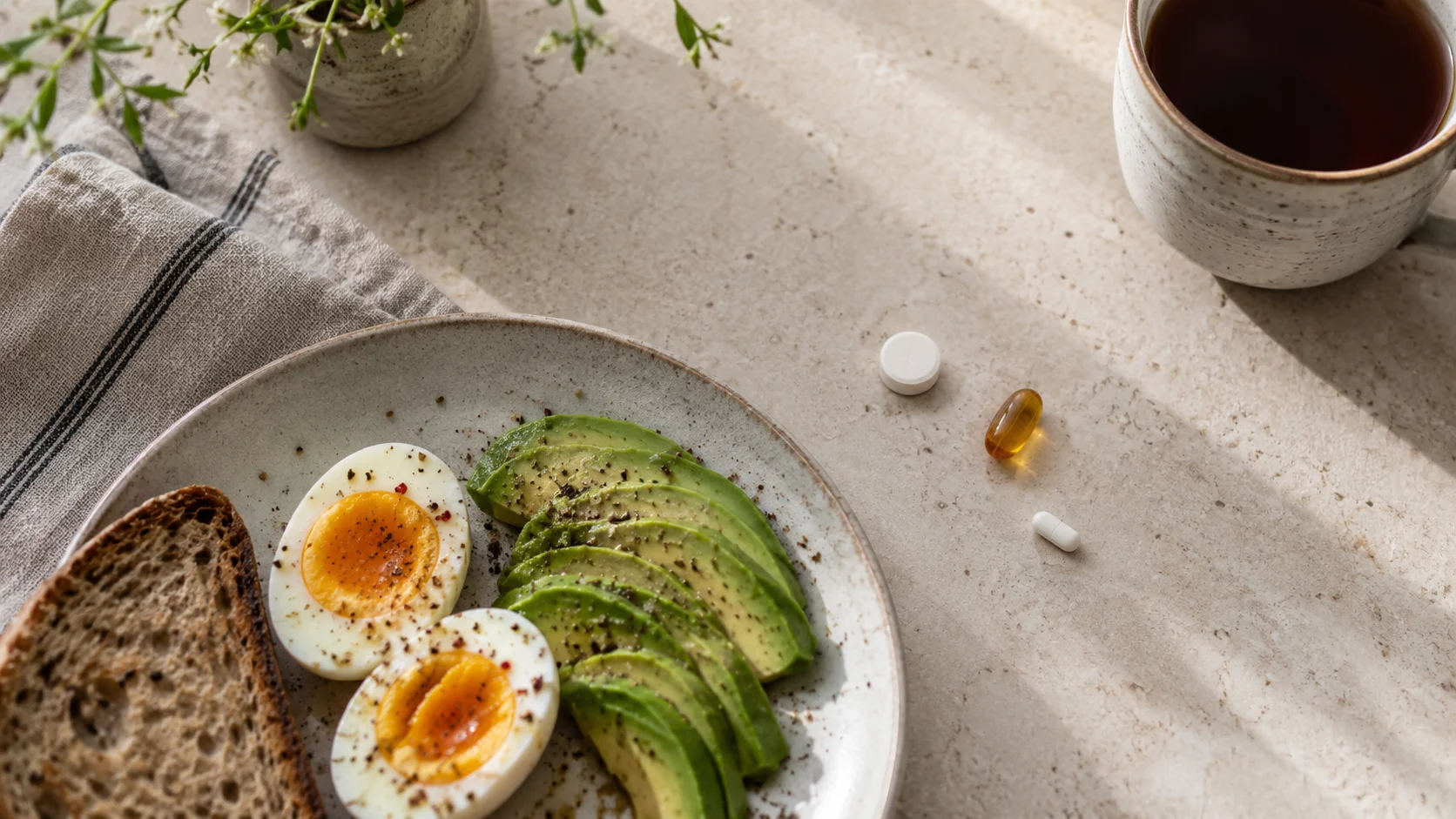
More than fifty young women with depleted iron stores reported to a laboratory at ETH Zurich, swallowed labelled iron tablets, and then gave blood often enough to track a hormone most of them had never heard of. The hormone is hepcidin, a peptide built from twenty five amino acids, and it governs how much of the next iron dose the gut will let through.
Hepcidin climbed after the first tablet, peaked six to eight hours later, and stayed high enough a full day afterward to blunt absorption of the following morning's dose. The supplement was not losing a fight with breakfast, it was losing one with itself. "To improve the percentage of iron absorbed, it would likely be more efficient to wait longer between doses," said Diego Moretti, the ETH researcher who led the work with professor Michael B. Zimmermann and published it in the journal Blood, in an account of the study released by the university.
The question of when to swallow a capsule gets asked at pharmacy counters constantly and answered in fragments. Supplement timing does change what reaches the bloodstream, though the size of the effect swings wildly from one shelf to the next, and the rules that circulate online tend to be the small ones dressed up as the large ones.
The Hormone That Closes the Door
Iron is the clearest case, because the body regulates it more tightly than almost anything else you can buy in a bottle. There is no efficient route for dumping excess iron, so absorption itself is the control valve, and hepcidin is the hand on that valve. A large dose raises hepcidin, raised hepcidin suppresses the transport protein that moves iron out of the intestinal cell, and the next dose arrives at a door that has already been pulled most of the way shut.
The practical consequence runs against the instinct that more frequent means more absorbed. A person taking sixty milligrams twice a day is spending the second dose into a hepcidin response created by the first, and a person taking a dose every morning is doing a slower version of the same thing. The ETH work found the hormone still elevated at the twenty four hour mark, which is why the alternate day schedule now appears in clinical conversation about iron supplement absorption rather than only in research abstracts.
None of this argues for taking less iron over a treatment course. It argues for spreading the same total across more days, and for treating a missed morning as a scheduling detail rather than a failure worth doubling up to correct.
Black Tea Took Most of the Iron Out of a Bread Meal
Richard Hurrell, Manju Reddy and James Cook fed volunteers a bread meal alongside a series of drinks and tracked how much iron crossed into circulation, publishing the results in the British Journal of Nutrition in 1999. Their tally reads like a ranking of everything a person might reasonably drink with breakfast.
Black tea suppressed non haem iron absorption by 79 to 94 percent. Peppermint tea reached 84 percent, pennyroyal 73 percent, cocoa 71 percent, vervain 59 percent, lime flower 52 percent and camomile 47 percent. The pattern tracked polyphenol content closely, with drinks carrying 20 to 50 milligrams per serving cutting absorption by half to seventy percent, and drinks carrying 100 to 400 milligrams cutting it by 60 to 90 percent.
Why That Number Shrinks in a Real Kitchen
A ninety percent reduction sounds like a reason to stop drinking tea, and for most people it is not. The National Institutes of Health Office of Dietary Supplements states in its professional fact sheet on iron that the effects of enhancers and inhibitors "are attenuated by a typical western diet, so they have little effect on most people's iron status." The office puts bioavailability at roughly 14 to 18 percent from mixed diets containing meat, seafood and vitamin C, against 5 to 12 percent from vegetarian diets.
Those two facts belong together. A percentage reduction applies to whatever iron was in that particular meal, so a large cut from a small number stays a small number, and the people who should care most are the ones whose baseline absorption is already at the bottom of the range. Someone treating a documented deficiency on a plant based diet has a real reason to move the tea an hour away from the tablet. Someone with normal stores eating a varied diet is optimizing a rounding error.
Vitamin D Has the Opposite Problem
Iron suffers from company. Vitamin D suffers from solitude, because it is fat soluble and a capsule taken with black coffee on an empty stomach has nothing to dissolve into. Bess Dawson-Hughes and colleagues at Tufts tested this directly, giving fifty adults aged fifty and older a 50,000 international unit dose with one of three breakfasts and following plasma levels for fourteen hours.
Mean peak plasma vitamin D3 ran 32 percent higher when the breakfast contained fat, at a significance level of 0.003, and the ratio of monounsaturated to polyunsaturated fat made no measurable difference. The authors wrote in the Journal of the Academy of Nutrition and Dietetics that the work "provides the rationale for recommending that vitamin D supplements be taken with a meal containing fat."
A smaller clinical observation had pointed the same direction five years earlier. Guy Mulligan and Angelo Licata followed seventeen patients whose blood levels had stalled on a stable supplement dose, asked them to move the pill to the largest meal of the day, and reported in the Journal of Bone and Mineral Research that average serum 25 hydroxyvitamin D rose 56.7 percent, with a standard deviation of 36.7 percent. Seventeen patients in a single clinic is a small and uncontrolled sample, and the wide spread says so plainly, but it points the same way as the randomized meal work that followed it.
The instruction that falls out of both studies is unglamorous. Move the fat soluble vitamins to the meal you are least likely to skip, which for most households is dinner, and stop taking them with the morning coffee that contains no fat at all.
The Four Hour Rule That Is Not a Suggestion
Levothyroxine, the thyroid replacement filled tens of millions of times a year in the United States, binds to common supplement minerals in the gut and stops being absorbed. The federal prescribing information puts it without hedging: "Calcium carbonate may form an insoluble chelate with levothyroxine, and ferrous sulfate likely forms a ferric-thyroxine complex. Administer Levothyroxine Sodium Tablets at least 4 hours apart from these agents."
The same label flags antacids, sucralfate, proton pump inhibitors, bile acid sequestrants and ion exchange resins as absorption reducers. A patient who takes a calcium chewable with a thyroid tablet is not blunting a benefit at the margin, they are undercutting a prescription whose dose was titrated by blood test, and the correction costs nothing beyond moving one of the two to the evening. This is the conversation that goes missing when nobody asks what else is in the cabinet, which is the gap between what people take and what their clinicians know about.
Building a Schedule You Will Keep
A workable routine has fewer rules than the internet suggests and enforces them harder. Fat soluble vitamins, meaning A, D, E and K, go with the largest fat containing meal of the day. Iron goes on its own schedule, ideally on alternate days when a clinician agrees, away from calcium supplements and away from the tea and coffee that carry the heaviest polyphenol loads. Thyroid medication holds its four hour perimeter against minerals, without exception.
Everything else can move to whichever slot survives a busy week. Magnesium is a partial exception worth reading about separately, since the form on the label changes how much of it you absorb more than the hour on the clock does. A B complex taken at nine at night and swallowed reliably beats a perfectly sequenced regimen abandoned by Thursday.
The evidence keeps landing in the same place. Adherence and dosing frequency move blood levels further than most pairing rules do, and the pairing rules that survive scrutiny cluster around a short list: fat for the fat soluble vitamins, distance for iron and its competitors, and four hours for the thyroid tablet. Everything past that list is optimization for people who have already done the first three.