Two research teams, one in Portugal and one in Poland, published surveys about a week apart this month. Neither set out to talk to the other. Read together, they describe a single failure from opposite ends of the same counter.
The Polish team asked 397 adults what a dietary supplement actually is. Under five percent got it right. Forty percent thought supplements were over-the-counter medicines. More than two thirds showed low or negligible knowledge of the category they were buying from. The Portuguese team asked 311 doctors, pharmacists, nurses and nutritionists whether herb and drug interactions matter clinically. More than ninety percent said yes. Fewer than fifty-eight percent said they routinely ask patients whether they take any. Barely forty-six percent ask about tea.
The short version
The gap in dietary supplement literacy is not a consumer problem that professionals will catch. Both halves of the safety net have holes, and they do not overlap in a way that covers anyone. Which means the disclosure burden has quietly landed on the person swallowing the capsule. The fix is unglamorous and takes about eleven seconds: bring the actual bottles to the appointment, and say the words out loud, including the teas.
What the clinicians said, and what they did
The Coimbra study, published in Nutrients on August 8, scored participants on a 22-item knowledge instrument. The median score was nine. Nine out of twenty-two, among people licensed to hand out prescriptions. Pharmacists did best, nurses lowest, and the difference between professions was statistically robust.
The authors' own framing is dry and precise: "a discrepancy exists between perceived clinical relevance and actual practice." That sentence deserves a slower read than it usually gets. These are not clinicians who dismiss herb drug interactions as folklore. Nine in ten say the risk is real. They simply are not asking, and a risk nobody asks about is a risk that does not exist on paper.
It is worth being honest about the limits here. This was a pilot, cross-sectional, self-reported, and Portuguese. It measures what practitioners say they do, not what a chart audit would show. It cannot tell you that supplements harmed anyone. What it can tell you is that the question is not being asked, and you cannot answer a question nobody asks.
What the shoppers believed
The Warsaw study, published August 3, did something cleverer than a standard poll. It played participants four radio advertisement transcripts, for memory, weight loss, immunity, and sleep, and then asked what they had just heard. Nearly forty-six percent came away believing the ads were claiming scientifically proven efficacy. Just over sixty percent said an ad like that could push them to start using the product if they had the problem it named.
Then the same people turned around and said the practice was wrong. Roughly seventy-four percent called that kind of advertising unfair and misleading when efficacy is unproven. People object to the mechanism and get moved by it anyway. That is not stupidity. That is how persuasion works on everyone, including the person writing this sentence.
The regression is the part that should change behavior. High expectation of efficacy raised the odds of supplement use by a factor of about eleven. Negligible product knowledge nearly tripled it. Believing a product is scientifically proven roughly doubled it. Read in reverse: the less someone understood, the more likely they were to be taking something. Jerome LeBloch of FoodChain ID put the conclusion plainly to NutraIngredients: "There is clearly a need of improving consumer knowledge."
Why a natural health site should say this out loud
An easy version of this article blames advertising and stops. That version is incomplete and slightly self-serving, since this whole category runs on advertising. The more useful reading is that natural health products got treated for years as a soft category, the sort of thing where the worst case is wasted money. That framing is wrong in both directions. It undersells what a well-chosen bioactive can do, and it badly undersells what happens when St. John's wort meets a prescription, or when high-dose green tea extract meets a liver already under load.
Real efficacy and real interaction risk are the same fact stated twice. Something inert cannot help you. If it helps you, it can also collide with something else. That is the price of admission for anything that actually works, and it is the strongest argument for taking evidence based supplement use as seriously as pharmacology, not as an alternative to it.
Both papers appeared in Nutrients, an MDPI journal that is properly indexed and also carries a contested reputation for editorial rigor. Both are European. Neither proves anything about American patients or American shelves. They are consistent with a pattern researchers keep finding in different countries, which is a weaker claim than a headline wants and a stronger one than nothing.
The eleven-second habit
Here is the practical translation, and it is smaller than the problem suggests.
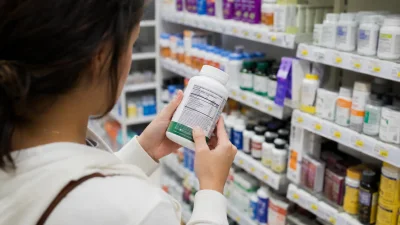
Photograph your shelf. Not a typed list, a photo of the actual bottles, front label and supplement facts panel, on your phone. Brands change formulations without changing the front of the package, and a photo captures what you are truly taking rather than what you remember buying. Anyone who has read our guide to the labels worth looking for already knows the panel carries more information than the marketing does.
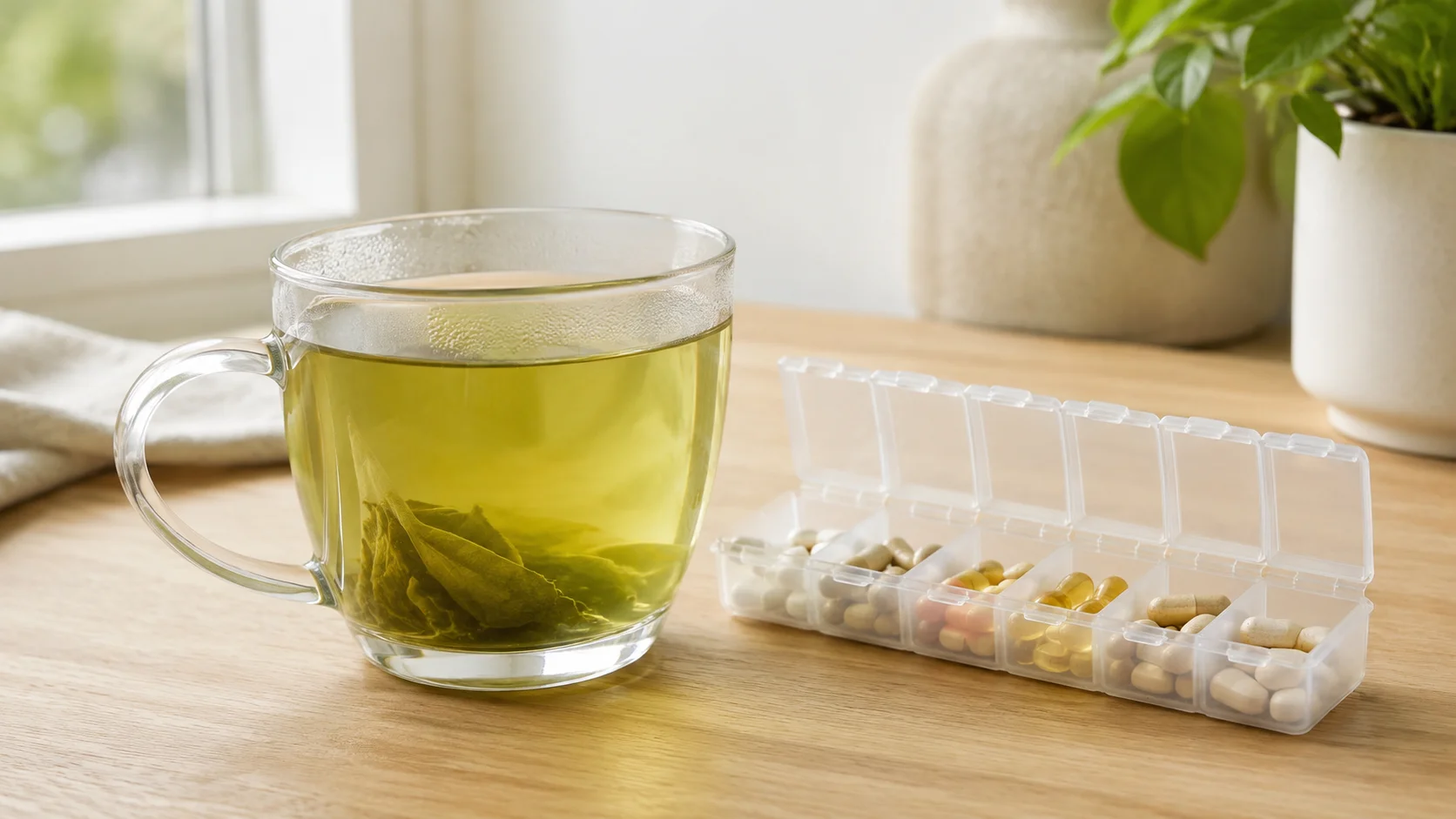
Then say the sentence at every appointment, before you are asked, because you probably will not be: "I take supplements, herbal products and teas, do you want the list." The Portuguese data says the tea question is the one most likely to go unasked, and teas are not decorative. Green tea, licorice root, and grapefruit-adjacent botanicals all carry documented pharmacological weight.
Bring it to the pharmacist too, not only the prescriber. Pharmacists scored highest in the Coimbra study by a clear margin, they are free to consult, and they see the whole medication list in one place. A five-minute counter conversation is the most underused resource in the entire system.
And apply the ad test the Warsaw study essentially handed us. When a claim moves you, ask which of three things you are actually reacting to: a cited human trial, a mechanism that merely sounds plausible, or a feeling. Mechanism language is where most supplement advertising claims live, because it is technically accurate and legally safe and tells you nothing about whether the product works at the dose in the bottle. The same discipline that separates hydration marketing from hydration evidence applies here, which our network took apart in a piece on the ninety-minute rule for electrolytes.
What this does not mean
It does not mean stop. A finding that people misunderstand a category is not a finding that the category is worthless. Fiber, magnesium in the right form, omega-3s at nutritional dose: the evidence there is not thin, and we have written about why the labeling rules are finally catching up.
It means the transition to systemic natural wellness requires the same paper trail as anything else. Not more fear. More documentation. Supplement label transparency is improving on the regulatory side and will keep improving. The clinical side is slower, and the surveys suggest it will stay slower for a while.
So carry your own record. The one question that closes most of this gap is a question you can ask yourself, standing in your own kitchen, before anyone else thinks to. Supplement safety questions do not require a chemistry degree. They require a photo and a sentence. Talking to your doctor about supplements is the intervention here, and unlike almost every other intervention in wellness, it is free.