On August 13, 2026, the Food and Drug Administration added three more products to a list it has been maintaining, reluctantly and in installments, since 2023. The products are named Slim Elixir, D Magic Plus, and B. Magi, sold by a company called Suerte Y Salud through a website with the word milagrosa (Miraculous) in it. They are sold as tejocote root, a Mexican hawthorn marketed for weight loss.
Laboratory testing keeps finding something else inside them.
The something else is yellow oleander, a flowering shrub whose seeds contain cardiac glycosides, the same class of compound that gives us digoxin. In the right dose, prescribed and monitored, that chemistry slows a racing heart. In an unmeasured dose inside a capsule someone is taking twice a day to lose fifteen pounds, it does something closer to the opposite of medicine.
The short answer
If you have a bottle in your cabinet labeled tejocote root, raiz de tejocote, Mexican hawthorn, Crataegus mexicana, or Brazil seed, stop taking it and call your clinician, even if you stopped weeks ago. That is the FDA's own instruction, not a cautious editorial add-on. This is not a story about a supplement that fails to deliver. It is a story about species substitution, where the plant on the label is not the plant in the capsule, and the substitute happens to be cardioactive.
How thorough the swap turned out to be
The scale here is what separates this from ordinary label puffery. The New Jersey Poison Information and Education System bought ten products sold as tejocote and tested them. Nine contained yellow oleander. Not nine contaminated with traces of it. Nine made of it, with no evidence of tejocote root present at all.
That finding, reported through the Centers for Disease Control and Prevention's Morbidity and Mortality Weekly Report, reframes the category. When one bottle in a hundred is adulterated, you have a bad actor. When nine in ten are, you have a supply chain in which the labeled ingredient was arguably never the point.
The Center for Science in the Public Interest, reviewing the FDA's expanding list, found the same pattern across twenty-three products, most of them bought on or fulfilled through major online marketplaces, with others from craft and specialty retailers. Its regulatory counsel Jensen Jose put the enforcement problem plainly.
"FDA is just playing a dangerous game of whack-a-mole where consumers lose."
He is describing a structural gap, not agency laziness. Under current law, a dietary supplement does not need pre-market approval. The FDA generally learns a product is dangerous after it is already in medicine cabinets, which means every FDA supplement warning of this kind is, by design, a report on something that already happened.
What the poisoning actually looks like
Cardiac glycoside toxicity does not announce itself as poisoning. It announces itself as nausea, vomiting, abdominal pain, and diarrhea, which a person taking a weight loss product may reasonably interpret as the product working. Then come the less ambiguous signs: confusion, weakness, dizziness, visual disturbances, an unusually slow or irregular heartbeat, palpitations, fainting.
The case that put this on regulators' desks involved a toddler in New Jersey who got into a bottle of a tejocote-labeled product. The child arrived with sinus bradycardia, frequent premature ventricular complexes, and the scooped ST segments on an electrocardiogram that a cardiologist reads as cardenolide exposure. Treatment required digoxin-specific antibody fragments, the antidote used for digoxin overdose, given in two doses. The child recovered.
The FDA's own language is unusually direct for an agency that hedges by habit. It says these products can cause effects that are "severe, or even fatal." No qualifier about individual variation. No paragraph about consulting your provider first.
Why this matters more for natural-first households, not less
There is a version of this story that ends with a smug conclusion about how supplements are unregulated and pharmaceuticals are safe. That conclusion is lazy, and it is not ours. The people most exposed here were not being reckless. They were doing something reasonable: choosing a plant over a drug, a root over an injectable, a bottle from a familiar cultural tradition over a prescription they could not afford or did not want.
The lesson is narrower and more useful. Natural does not mean safe was never the whole sentence. The full sentence is that natural means botanical, botanical means species, and species is a fact that has to be verified rather than assumed. Digitalis is natural. Foxglove grows in gardens. Nobody eats it.
What makes weight loss supplements the highest-risk shelf in the store is not the ingredients. It is the incentive. A product sold on the promise of a fast visible result attracts buyers who will tolerate side effects as evidence of efficacy, and sellers who know it. That combination is what allows botanical adulteration to survive in a category for three years after a federal warning.
How to vet a botanical before it enters your body
Read for the Latin, not the marketing
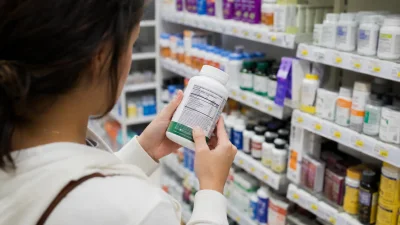
A trustworthy botanical label gives the binomial name, the part of the plant used, and the extraction ratio. Crataegus mexicana, root, and a ratio. If a bottle gives you only a common name and a promise, you have no way to know what species you are holding. That is the foundation of supplement label literacy, and it takes about eleven seconds per product once you know to look. Our breakdown of the labels worth insisting on covers the rest of what belongs on a bottle.
Insist on independent verification
A manufacturer testing its own product is a manufacturer grading its own exam. Look for a certificate of analysis from an outside laboratory, dated and lot-specific, and for identity testing rather than only potency testing. Potency testing asks how much is in here. Identity testing asks what is in here, and in the tejocote case, only the second question would have caught anything. Third-party testing marks such as USP Verified or NSF Certified for Sport are imperfect and still meaningfully better than nothing.
Treat marketplace listings as a warning sign, not a review
Most of the adulterated tejocote root supplements reached buyers through large online marketplaces where the seller of record is a shell, the reviews are gamed, and the listing can be relabeled overnight without the product changing. A five-star average tells you people liked how they felt. Nine of those ten products were yellow oleander. People felt something.
Be suspicious of any botanical that promises a metabolic result
The categories with the worst adulteration records are consistently the ones selling fast outcomes: weight loss, sexual performance, muscle gain, and sleep. If a plant genuinely produced pharmaceutical-grade results, it would be a pharmaceutical. We made a version of this argument when we looked at the ingredients marketed as nature's answer to GLP-1 drugs, and the reasoning holds here. For anyone who is on an actual GLP-1 medication, our network partners at H2 Goals covered a related and underdiscussed problem, the hydration gap those drugs create.
What to do this week
Go look at the cabinet. Not the one you use daily, the other one, the shelf with the half-finished bottles from two Januaries ago. Anything labeled tejocote, raiz de tejocote, Mexican hawthorn, or Brazil seed goes in the trash, and if anyone in the household took it, that is a call to a clinician rather than a wait-and-see. If someone has serious symptoms, that is 911, not an appointment.
Then do the boring thing that actually protects you long term, which is to check the FDA's public advisory list before buying any new botanical, the way you would check a recall list before buying ground beef. It takes a minute. It is a habit almost nobody has, and it is the closest thing this market offers to a safety net.
The promise of going natural is that you get to know what is in the thing. That promise is real, and it is conditional. It only holds if somebody actually checked.