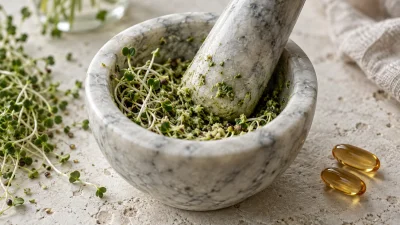
The average American household spends hundreds of dollars a year on over-the-counter medications. Pain relievers for headaches and muscle soreness. Antacids for after dinner. Sleep aids for when the mind won't quiet down. Antihistamines pulled double duty as sedatives. OTC medication use has become so normalized that most people never stop to ask whether the conditions driving that use could be addressed somewhere upstream, before the symptom shows up and demands a pill.
This is not an argument against OTC medications. They serve a real purpose, and there are times when reaching for ibuprofen or an antacid is the right call. But research consistently points to a gap between how these products are used and how they were intended to function. A 2024 estimate placed annual OTC drug sales in the United States at over $44 billion. The question worth sitting with is how much of that spending is treating problems that daily lifestyle inputs could meaningfully prevent.
What follows are five evidence-informed habits that, practiced consistently, have been shown to reduce the frequency and severity of the most common conditions driving OTC use. Not overnight. Not dramatically. But in the kind of steady, compounding way that actually changes your baseline health over time.
1. Hydrate Before You Medicate
Dehydration is one of the most underappreciated contributors to everyday symptoms. Headaches, afternoon fatigue, difficulty concentrating, muscle cramping, digestive sluggishness, and even cravings that get misread as hunger can all trace back, at least in part, to insufficient fluid intake. Research published in the ACSM's Health Fitness Journal found that even mild dehydration, defined as a fluid loss of just one to two percent of body weight, is enough to impair cognitive performance, trigger headaches, and increase fatigue. That is a meaningful threshold that many people cross routinely without recognizing it.
The Cleveland Clinic notes that by the time you feel thirsty, mild dehydration has already begun. The practical implication is that thirst is a trailing indicator, not a reliable early warning system. Consistent daily hydration, rather than reactive drinking in response to thirst, is what keeps those early symptoms from surfacing in the first place. For a significant portion of people, the headache they're reaching for ibuprofen to treat in the early afternoon would not have developed if they had started their morning with sixteen ounces of water and maintained consistent intake through the day.
If performance hydration and electrolyte balance are part of your broader wellness goals, the science-driven team at H2Goals covers that territory in depth and is a useful companion resource to this guide.
2. Shift Your Diet Toward Anti-Inflammatory Foods
The most common OTC purchases in the United States are pain relievers. Acetaminophen, ibuprofen, aspirin, and naproxen collectively dominate the top of the list. A significant portion of the conditions these drugs are used to manage, including joint pain, tension headaches, and general inflammation-driven discomfort, share a common root: chronic, low-grade systemic inflammation. And chronic inflammation is substantially influenced by what you eat every day.
The evidence base here is substantial and growing. A 2023 pilot study published in Frontiers in Nutrition found that increased intake of anti-inflammatory foods correlated with improved pain scores, reduced stress markers, and better sleep satisfaction in patients with chronic pain conditions. A broader 2024 systematic review and meta-analysis confirmed that anti-inflammatory dietary interventions improve disease-specific clinical markers across a range of chronic conditions, including significant reductions in pain for individuals with rheumatoid arthritis. The Mediterranean dietary pattern, which emphasizes fatty fish, olive oil, leafy greens, legumes, nuts, and whole grains while limiting processed foods and refined sugars, is the most extensively researched model and consistently shows meaningful reductions in inflammatory biomarkers.
None of this requires a complete dietary overhaul. The research supports incremental shifts: adding more omega-3-rich foods, reducing processed grain and sugar intake, and increasing vegetable variety. These changes compound over weeks and months in ways that reduce the inflammatory load your body is managing on any given day, which translates directly into fewer symptoms requiring chemical intervention.
3. Prioritize Sleep Architecture, Not Just Sleep Duration
Sleep deprivation is a significant driver of OTC dependency in two directions at once. Poor sleep increases pain sensitivity, impairs immune function, and elevates inflammation markers, which leads to greater reliance on pain relievers and immune-support products. Then, to manage the resulting difficulty sleeping, many people turn to OTC sleep aids containing diphenhydramine, the antihistamine found in products like Benadryl, ZzzQuil, and Tylenol PM. Research from the U.S. National Library of Medicine has flagged diphenhydramine-based sleep aids as potentially problematic for certain populations, citing links to increased dementia risk, daytime drowsiness, and digestive disruption with regular use.
The American Academy of Sleep Medicine formally recommends Cognitive Behavioral Therapy for Insomnia, known as CBT-I, as a first-line treatment over sleep medication, noting it is equally effective in the short term and more effective long-term without the associated side effects. But outside of clinical intervention, the habits that most reliably improve sleep quality are well-documented: consistent wake times regardless of bedtime, reducing blue light exposure in the two hours before sleep, keeping the bedroom cool, and avoiding alcohol and heavy meals in the evening. These inputs shape sleep architecture, meaning the depth and quality of sleep cycles, not just total hours in bed.
Better sleep architecture reduces the physiological conditions that drive OTC use across multiple categories simultaneously. It is, arguably, the highest-leverage single habit on this list.
4. Move Your Body Daily, Even When It Hurts
This one runs counter to what most people instinctively do. When the body aches, the default response is rest and a pain reliever. But a significant body of research on chronic pain, musculoskeletal health, and inflammation management points in a different direction. Consistent, moderate daily movement is one of the most effective long-term strategies for reducing chronic pain, not intensifying it.
Exercise reduces systemic inflammation through multiple mechanisms: it improves circulation, supports lymphatic drainage, stimulates the production of endorphins and anti-inflammatory cytokines, and maintains the muscle tone and joint mobility that prevent the compressive pain patterns associated with sedentary postures. Walking, swimming, cycling, and yoga all have meaningful evidence bases for chronic pain reduction with consistent practice. The key word is consistent. A single workout does not produce these effects. Daily or near-daily movement, even at low intensity, does.
For those building movement into a natural wellness routine, the connection between consistent yoga practice and measurable reductions in inflammation and stress hormones is well-supported by peer-reviewed research, something explored in detail over at KitsnCo. The point, regardless of modality, is that the body is designed for regular movement, and the pain that drives OTC use is often, in part, the cost of its absence.
5. Manage Stress at the Source, Not the Symptom
Chronic stress is a silent driver behind a remarkable range of conditions that generate OTC spending. Tension headaches. Digestive disruption. Sleep difficulty. Immune suppression that makes every passing virus harder to shake. Elevated cortisol, the body's primary stress hormone, is pro-inflammatory by nature. Sustained elevation of cortisol over weeks and months contributes directly to the kind of low-grade systemic inflammation that makes the body more sensitive to pain, more vulnerable to illness, and slower to recover from both.
The most evidence-supported stress management practices for reducing physiological stress markers are not complicated: consistent aerobic exercise (which overlaps with habit four), mindfulness meditation practiced regularly rather than occasionally, time in natural environments, and social connection. A growing body of research supports diaphragmatic breathing specifically as a rapid, accessible tool for activating the parasympathetic nervous system and lowering acute stress responses. None of these require expensive tools or significant time blocks. They require consistency, which is the variable most people underestimate.
Managing stress at its physiological root reduces the number of stress-generated symptoms that prompt OTC use. It also improves sleep, reduces inflammatory load, and supports better dietary choices, creating a compounding feedback loop that makes every other habit on this list more effective.
These five habits share a common logic: they address the conditions that generate symptoms rather than suppressing the symptoms themselves. That distinction matters not just philosophically but practically. OTC medications are designed to manage acute symptoms. When those same products are being used daily or near-daily to manage conditions that never resolve, that pattern is a signal worth examining.
The goal is not to eliminate OTC medications from your life. It is to reduce the frequency with which your body requires them by building a physiological baseline that generates fewer symptoms in the first place. Hydration, anti-inflammatory nutrition, quality sleep, daily movement, and stress management are not a protocol. They are the inputs your body was designed to run on. Restoring them, one consistent habit at a time, is the most direct path toward a body that needs less chemical support to function at its best.
That is what natural wellness actually looks like in practice: not the absence of all synthetic support, but a life oriented around inputs that make that support less necessary.